
SANDBLASTING
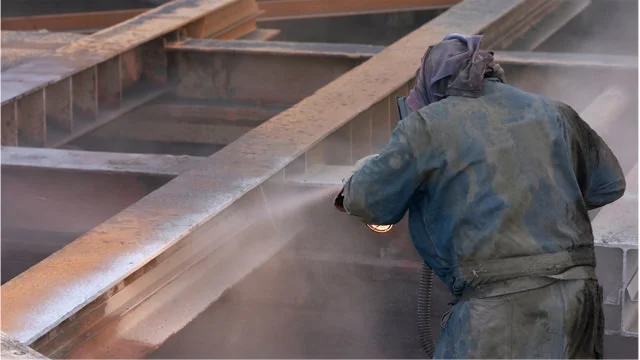
sandblasting
Sandblasting is a surface preparation technique that uses high-pressure air to propel abrasive media — traditionally sand, though modern blasting often uses substitutes like glass beads, aluminum oxide, or crushed walnut shells — against a surface to strip away old paint, rust, mildew, and other buildup down to bare, clean substrate. It's commonly used on commercial properties to prep masonry, metal, concrete, and stucco before recoating, since it removes contaminants and creates a slightly roughened surface profile that helps new paint or coatings adhere far better than they would on a smooth or partially-prepped surface.
The process is fast and effective for large areas, but it's also aggressive, so it requires skilled operators who can adjust pressure and media type to avoid damaging softer substrates like wood or aging brick. Because of the dust and debris it generates, sandblasting typically involves containment measures — tarps, ventilation, or enclosed blasting systems — to protect the surrounding property, nearby tenants, and the environment, and it's often paired with proper PPE and disposal protocols to handle old lead paint or other hazardous materials safely.