
Our team of certified professionals is trained in the latest fireproofing techniques and technologies to ensure that each project is executed with the highest standards of quality and safety. Each job is tailored to the unique needs of the building. We utilize a variety of materials in the two types of fireproofing services that we offer.
FIREPROOFING
Intumescent Applied Fire-Resistive Materials (IFRM)
Intumescent Fire-Resistive Material (IFRM) is a high-performance passive fire protection solution prized for its sleek appearance and exceptional effectiveness in architecturally exposed structural applications. Unlike traditional spray-applied systems, IFRM is a thin-film coating that reacts chemically when exposed to elevated temperatures — expanding dramatically to form a thick, insulating char layer that shields the underlying steel from heat and delays structural failure. This intumescent reaction provides the critical time needed for safe building evacuation and emergency response, all while maintaining a clean, paint-like finish that satisfies the aesthetic demands of modern architecture. Applied by brush, roller, or spray to structural steel members, IFRM is available in water-based and solvent-based formulations and can be top-coated to match virtually any design specification. Ideal for exposed steel in lobbies, atriums, stadiums, and commercial spaces, IFRM systems are independently tested and listed to achieve fire-resistance ratings in full compliance with building codes and AISC, UL, and FM standards.
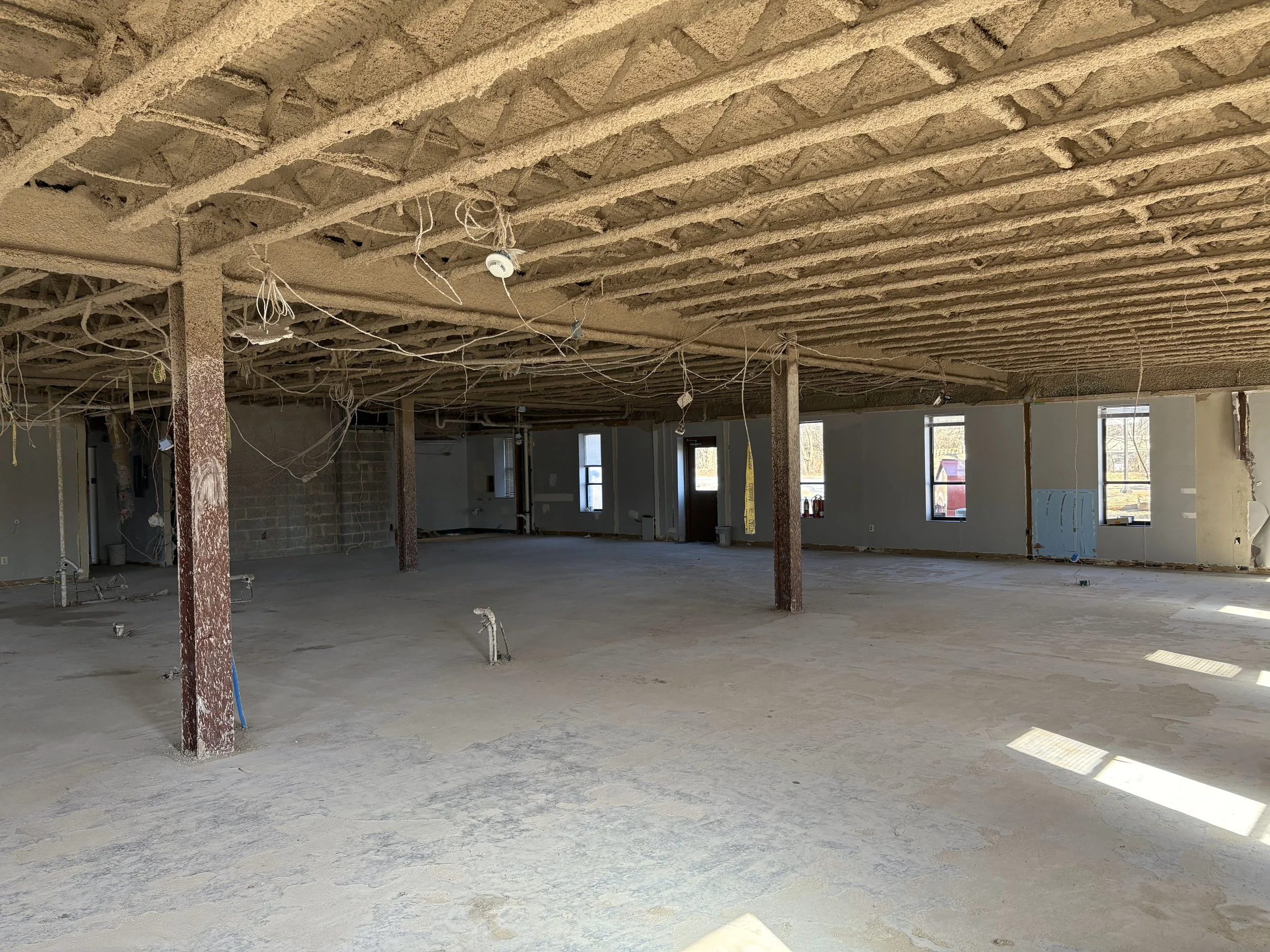
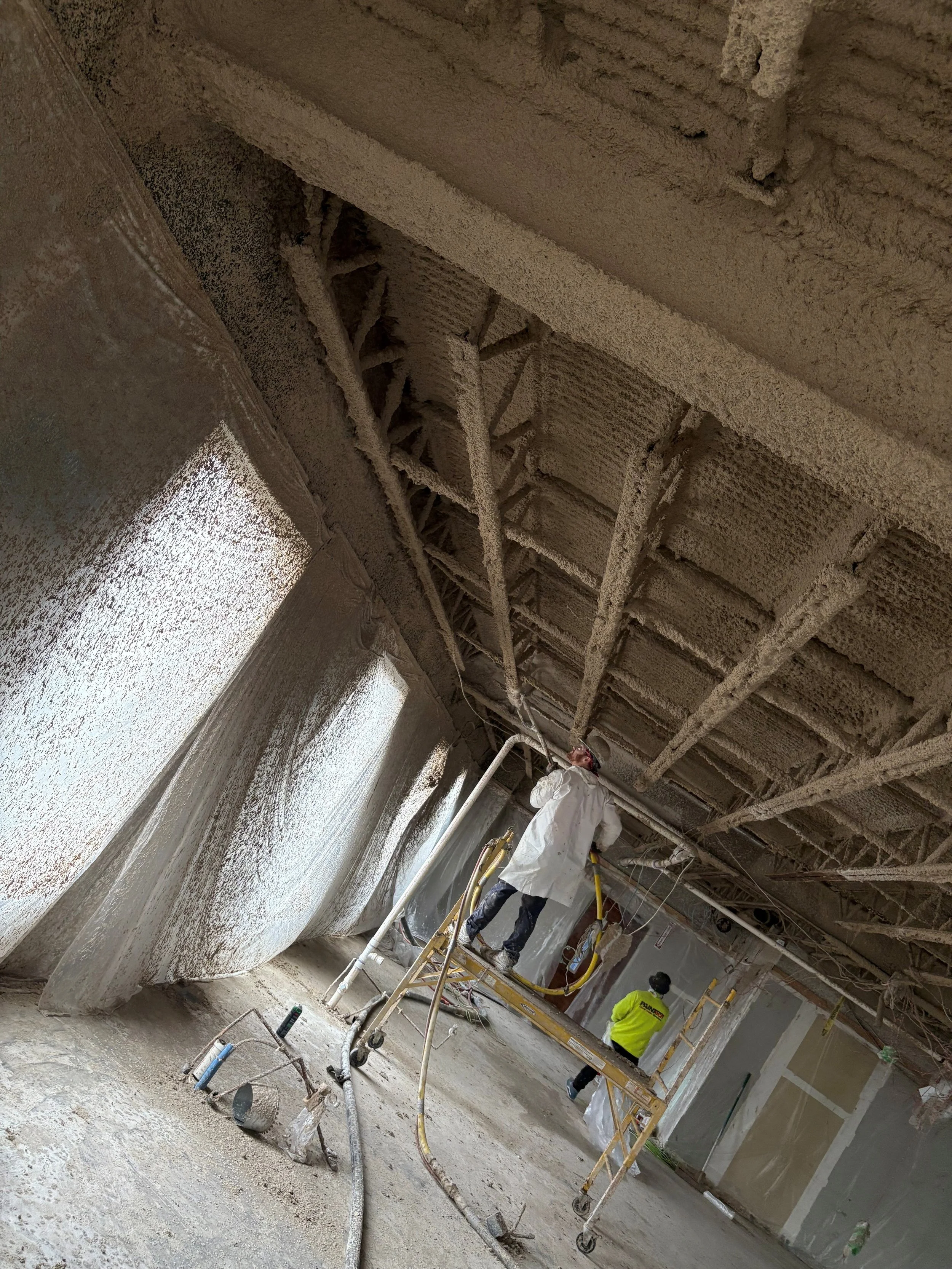
Spray-Applied Fire-Resistive Materials (SFRM)
Spray-Applied Fire-Resistive Material (SFRM) is one of the most widely used passive fire protection techniques in commercial and industrial construction. Applied directly to structural steel, concrete, and other substrates, SFRM works by insulating the underlying material from extreme heat during a fire event — slowing the rate at which the structure absorbs thermal energy and preserving its load-bearing integrity long enough for safe evacuation and firefighting response. The material is spray-applied on-site, making it highly adaptable to complex geometries like beams, columns, and deck assemblies. Available in both cementitious and intumescent formulations, SFRM systems are engineered to meet specific fire-resistance ratings — typically 1, 2, or 3 hours — as required by building codes and project specifications. Properly installed and inspected SFRM is a cost-effective, code-compliant solution trusted by engineers and contractors to protect the structural core of buildings against catastrophic fire damage.