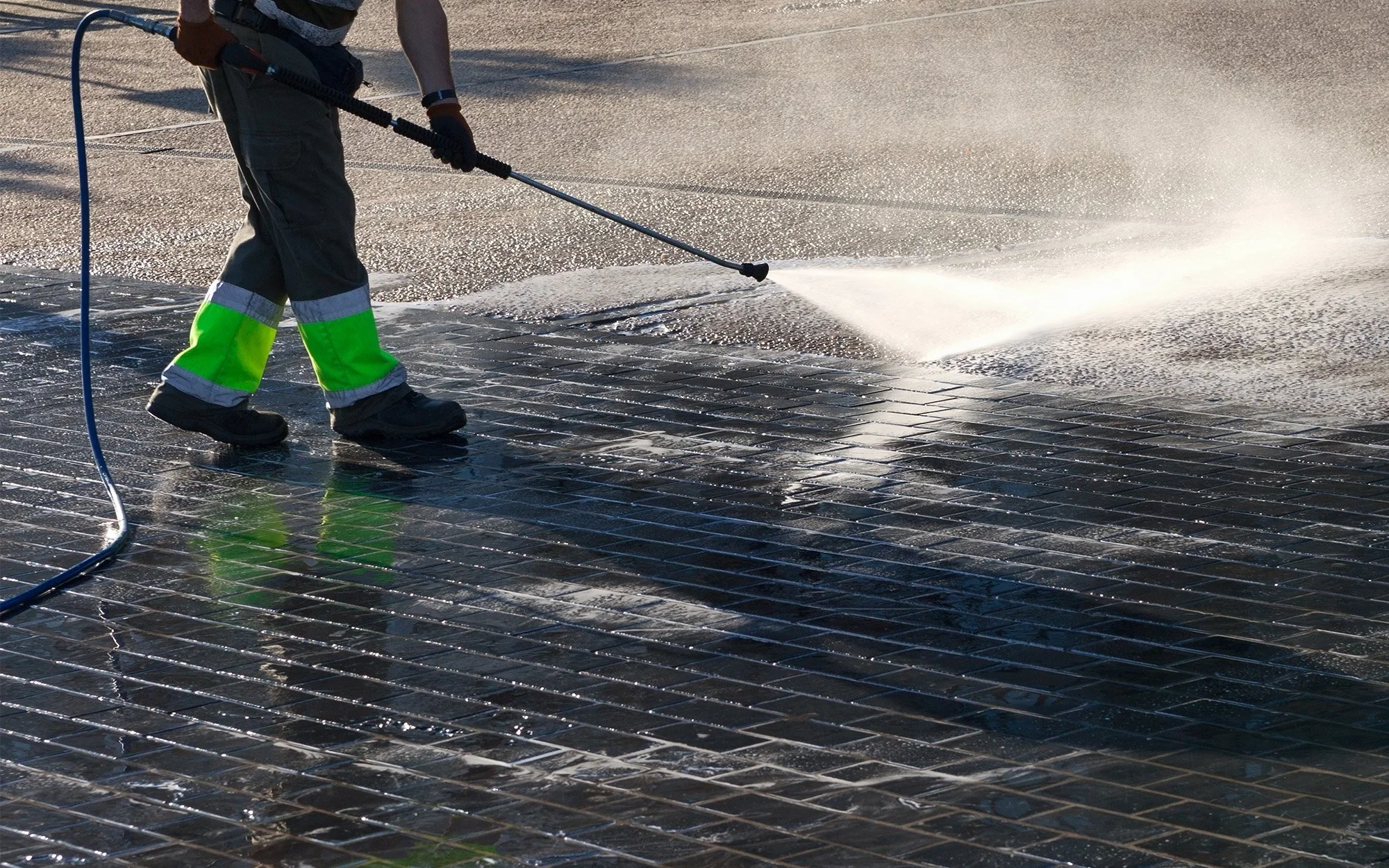
Powerwashing
Power washing is a critical first step in most commercial painting projects, using high-pressure water to strip away dirt, grime, chalking paint, mold, mildew, and other surface contaminants before any prep work or coating begins. A clean substrate is essential because paint and coatings won't properly bond to surfaces covered in dust, oils, or organic growth — skipping this step is one of the most common reasons paint jobs fail prematurely, peeling or blistering within a year or two instead of lasting as intended. Pressure levels are typically adjusted based on the substrate: stucco, brick, and concrete can usually handle higher PSI, while wood siding, softer materials, or older or more fragile surfaces need lower pressure to avoid gouging, splintering, or forcing water behind the surface. Many commercial jobs also incorporate a cleaning solution or mild detergent alongside the water to break down mildew and biological growth more effectively than water pressure alone. Once washed, surfaces need adequate drying time — often 24 to 48 hours depending on weather and material — before priming or painting begins, ensuring the new coating has a clean, dry, properly adhering surface to work with.